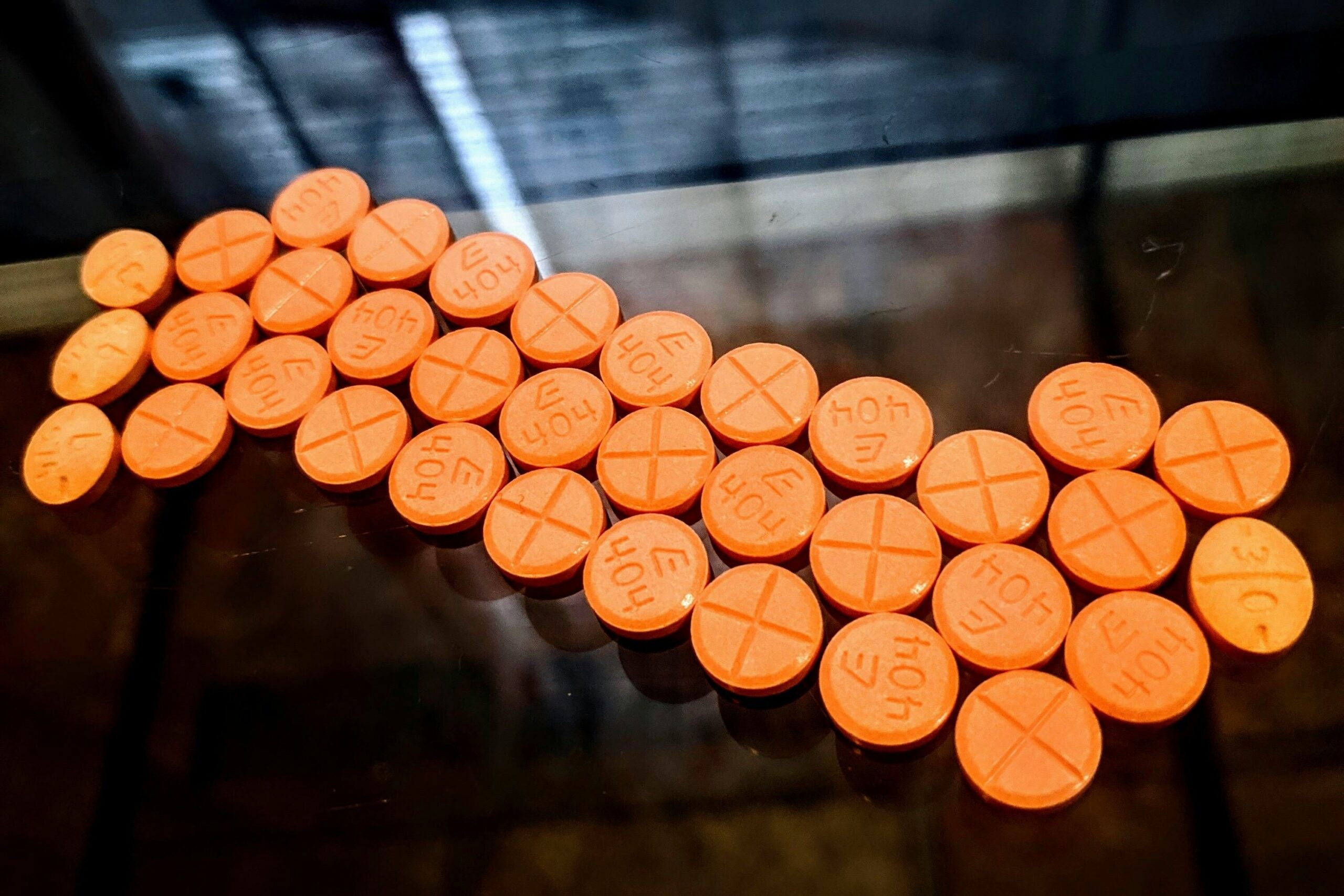
Yes, you can get addicted to Adderall.
Adderall is classified as a Schedule II controlled substance, which is the same federal category as morphine and oxycodone [1]. That classification means it has real potential for misuse and dependence.
But that doesn’t mean everyone who takes Adderall will become addicted. The risk for addiction depends on how it’s used.
People who take Adderall exactly as prescribed for ADHD don’t appear to be at higher risk. The risk goes up when Adderall is misused, meaning taken without a prescription, in higher doses than prescribed, or to get high.
If you’re worried about your own Adderall use or a loved one’s, you may benefit from Adderall addiction treatment for women.
Key Takeaways
- Adderall is a Schedule II controlled substance with real potential for addiction.
- Taking Adderall as prescribed for ADHD does not appear to raise addiction risk.
- Misuse, especially without a prescription or in higher doses, significantly increases risk.
- Young adults are the highest-risk group for Adderall misuse.
- Treatment is available and works.
What makes Adderall addictive
Adderall is an amphetamine-based stimulant. It works by increasing the activity of two neurotransmitters: dopamine and norepinephrine [1].
Dopamine is the same chemical found in most addictive substances. This is why Adderall feels good to people who don’t have ADHD, and why it can become hard to stop.
How Adderall is taken also matters. Most misuse is oral, but some people snort or inject it, which significantly raises the risk of dependence and harm [2].
Taking high doses, or using for long periods of time without medical supervision, also raises the risk.

When Adderall use becomes misuse
The National Institute on Drug Abuse defines misuse as taking a medication in a way other than prescribed, taking someone else’s prescription, or taking it to feel high [2].
Common reasons people misuse Adderall include:
- Concentration or focus. The most common reason adults misuse stimulants.
- Staying awake. Often tied to work or school demands. Especially common on college campuses.
- Weight loss. Adderall suppresses appetite.
- Recreational use. Taking it to get high or party.
Most adults who misuse Adderall get it from friends or family—typically someone with a legitimate prescription [2]. A 2016 Johns Hopkins study found that diversion, meaning sharing or selling a prescribed medication, is the main driver of adderall misuse [3].
Who is most at risk for Adderall addiction
Some groups of individuals have higher rates of Adderall misuse than others. The most consistent risk factors include:
- Being between ages 18 and 25. This age range has the highest rates of misuse.
- Being in college. Especially during finals or other high-pressure times.
- A history of substance use. Past use of other substances raises risk.
- Untreated mental health symptoms. Depression, anxiety, and untreated ADHD all increase risk.
- Easy access to a prescription. Family members or friends with prescriptions are a common source.
This doesn’t mean people outside these groups are safe. It just means these are the groups where misuse most often shows up.
Signs of Adderall addiction
Adderall addiction looks different from person to person, but a few patterns come up consistently. It might be worth talking to a provider if you notice:
- Needing more Adderall to get the same effect
- Trying to stop or cut back without success
- Continuing to use despite problems with sleep, mood, work, or relationships
- Spending a lot of time or money getting Adderall
- Feeling withdrawal symptoms when you stop or run out
- Using more than your prescription says, or using it for reasons unrelated to ADHD
These are the same signs clinicians look for when diagnosing a stimulant use disorder. Only a provider can make that diagnosis, but if these patterns sound familiar, it’s worth getting evaluated.
Adderall withdrawal and recovery
Quitting Adderall can be uncomfortable, especially after ongoing or heavy use.
Common withdrawal symptoms may include:
- Fatigue and low energy
- Depression and low mood
- Anxiety, irritability, or feeling on edge
- Increased appetite
- Sleep problems, including vivid or unsettling dreams
- Trouble concentrating
- Slowed thinking or feeling “flat”
- Cravings
Most acute adderall withdrawal symptoms last a few days to a couple of weeks. Rebuilding your routines, mood, and motivation can take longer.
If this sounds daunting, it’s important to remember that treatment helps. Therapies like CBT and DBT are well-studied for stimulant use, and structured addiction treatment programs can address both substance use and any underlying mental health concerns at the same time.
When to seek support for Adderall addiction
Not everyone who uses Adderall problematically needs intensive treatment. But if any of these sound familiar, it’s worth talking to someone:
- Adderall is interfering with your sleep, mood, work, school, or relationships
- You’ve tried to cut back without success
- You’re using to manage anxiety, depression, or untreated ADHD
- You feel like you can’t function without it
- The people in your life have expressed concern
For people whose Adderall use overlaps with other mental health concerns, dual diagnosis treatment can address both at once.

How Monima Wellness Can Help
Monima Wellness offers trauma-focused Adderall addiction treatment for women and female-identifying individuals through our PHP and IOP programs. Every client receives neuropsychological testing and access to on-site psychiatry, which is especially helpful when Adderall use overlaps with ADHD, depression, or anxiety. Verify your insurance or call 858-500-1542 to talk with our admissions team.
FAQs
Adderall has high potential for addiction, which is why the DEA classifies it as a Schedule II controlled substance, the same category as morphine and oxycodone. Addiction risk is tied to how it’s used. People who take Adderall exactly as prescribed for ADHD aren’t at significantly higher risk. On the other hand, those who misuse the drug face much higher risk of dependence and addiction.
Yes, stopping Adderall after regular use can cause withdrawal symptoms, especially if you’ve been taking it long-term, or in large amounts. Common withdrawal symptoms include fatigue, depression, increased appetite, sleep problems, trouble concentrating, and strong cravings. Acute symptoms usually last a few days to a couple of weeks, though mood and motivation may take longer to rebalance.
Because Adderall is a Schedule II controlled substance, federal law requires a new written prescription each time, with no refills allowed. Many pharmacies and prescribers use a 28 to 30 day rule, meaning you generally can’t fill a new prescription earlier than 28 to 30 days after the last one. This safeguard reduces the risk of misuse and diversion.
Yes. ADHD medications like Adderall and Ritalin can be addictive when misused. But research shows that people who take stimulant ADHD medication as prescribed aren’t at higher risk for substance use, and may actually have lower rates than people with ADHD who go untreated [4]. What matters most is whether the medication is being used as directed.
[1] Weyandt, L. L., Oster, D. R., Marraccini, M. E., Gudmundsdottir, B. G., Munro, B. A., Rathkey, E. S., & McCallum, A. (2016). Prescription stimulant medication misuse: Where are we and where do we go from here? Experimental and Clinical Psychopharmacology, 24(5), 400–414. https://pmc.ncbi.nlm.nih.gov/articles/PMC5113141/
[2] Maglione, M., Batra, J., Pakdaman, S., Sysawang, K., Yagyu, S., Foster, E., Zhang, D., Motala, A., Peterson, B., Trampush, J., Tolentino, D., & Hempel, S. (2025). Misuse of ADHD prescription stimulants in adults. Agency for Healthcare Research and Quality. https://www.ncbi.nlm.nih.gov/books/NBK620122/
[3] Johns Hopkins Bloomberg School of Public Health. (2016). Adderall misuse rising among young adults. https://publichealth.jhu.edu/2016/adderall-misuse-rising-among-young-adults
[4] Chang, Z., Lichtenstein, P., Halldner, L., D’Onofrio, B., Serlachius, E., Fazel, S., Långström, N., & Larsson, H. (2014). Stimulant ADHD medication and risk for substance abuse. Journal of Child Psychology and Psychiatry, 55(8), 878–885. https://pmc.ncbi.nlm.nih.gov/articles/PMC4147667/