
Adderall is widely prescribed for ADHD, and for many people, it can significantly improve symptoms and daily functioning. That said, questions about addiction come up frequently, especially for those who may be taking the medication long-term or are considering it for the first time. The short answer is yes, Adderall can be addictive–even for people with ADHD. The risk of developing an addiction to stimulant medications varies, however, depending on several factors, including how it’s used, personal history, and even the way it’s managed and overseen by prescribers.
When ADHD and substance use issues overlap, it’s often referred to as dual diagnosis. Effective treatment and rehab programs should address both the substance use and ADHD simultaneously rather than treating them as separate issues. If you understand how Adderall works, what increases the risk of addiction, and when additional support may be necessary, you can make more informed decisions about your mental health.
Key Takeaways
- Adderall can be addictive for people with ADHD, though the risk is generally lower when it’s taken as prescribed and monitored carefully.
- Adderall and stimulant ADHD medications affect dopamine and norepinephrine, which help with focus but can also reinforce dependence over time.
- Risk tends to be higher for people with trauma and PTSD, co-occurring mental health conditions, or past substance use.
- Using Adderall to cope with emotions (self-medication), rather than for ADHD symptoms, is a common sign that additional support may be needed.
- Treatment can range from medication oversight and therapy to more intensive treatment programs when more structured support is needed.
Is Adderall Addictive for People With ADHD?

Yes, it can be. Adderall is a Schedule II stimulant. That means this medication can hold two realities at the same time: (1) it has legitimate medical use and can improve quality of life for many people, and (2) it carries a recognized risk for misuse. Having ADHD by itself does not remove that risk. This is why thoughtful prescribing and ongoing monitoring are so important. These things can help lower the risk of developing addiction.
Whether Adderall becomes problematic for each individual typically depends on several factors, including:
- Whether it’s taken as prescribed
- Dose, formulation, and length of use
- Individual nervous system sensitivity
- Co-occurring conditions such as trauma, anxiety, or past substance use
Many people with ADHD don’t experience a euphoric effect when taking Adderall as directed. Even so, physical dependence or emotional reliance can develop gradually. When concerns arise, reassessing treatment with support is a responsible step, not a sign of failure.
Is Adderall Addictive in General?
Adderall increases dopamine and norepinephrine, which are the chemicals in your brain that are involved in attention and motivation. These systems are also tied to reinforcement and habit formation. This explains why adderall misuse can lead to addiction.
Risk of adderall addiction tends to increase when the medication is:
- Taken without a prescription
- Used in higher or more frequent doses than directed (binges)
- Used for focus, energy, or appetite control rather than ADHD symptoms
When used in these ways, tolerance can develop, meaning the same dose begins to feel less effective. Noticing these changes early can make it easier to pause, reassess, and decide what kind of support might help next.
Can You Get Addicted to ADHD Medication If You Have ADHD?
Yes. Having ADHD does not eliminate the risk of misuse, dependence, or addiction. What it can change is how stimulant medication is experienced from person to person.
For many people with ADHD, Adderall improves focus and attention rather than producing a euphoric “high.” However, misuse and dependence can still occur, particularly when other risk factors are present. Some of these may include:
- A personal or family history of substance use
- Unresolved trauma or chronic stress
- Co-occurring anxiety, depression, or difficulties with sleep
- Using medication primarily to manage emotional distress
If your ADHD medication begins to feel like a necessity just to get through the day emotionally, that’s often a cue to reach out for additional support. Without other coping tools in place, some people may find themselves relying more heavily on Adderall than intended, which can increase the risk of misuse or other difficulties over time.
What Does Adderall Do to Someone With ADHD?
Adderall increases dopamine and norepinephrine activity in brain regions responsible for attention and executive functioning. For many people with ADHD, this has an overall positive impact on mental health, leading to improved focus, impulse control, and task completion.
Common therapeutic effects include:
- Improved concentration
- Better impulse control
- Less distractibility
- Greater follow-through on tasks
That said, experiences with stimulants, including Adderall, are varied. Some people feel calmer and more regulated, while others notice anxiety or sleep disruption, particularly if the dose is not well matched. Medication often works best alongside additional interventions that address nervous system regulation and overall emotional health.
What Are the Downsides of Adderall?
Adderall isn’t a fit for everyone, and although it’s helpful, side effects are possible. Understanding what these might look like can help when considering risks vs. benefits.
Possible downsides of Adderall include:
- Appetite suppression or weight changes
- Difficulty sleeping
- Increased anxiety or restlessness
- Mood changes or emotional flattening
- Changes in heart rate or blood pressure
Long-term use, particularly at higher doses or when used outside prescribing guidance, can increase the risk of dependence. This is why providers regularly follow up with patients taking Adderall to monitor response, side effects, and adjust treatment as needed.
For women, stimulant side effects can also vary based on hormonal shifts, metabolism, and nervous system sensitivity. For a closer look at how this can show up in women and female-identifying individuals, this guide on the side effects of Adderall in women explores those patterns in more detail.
What Increases the Risk of Adderall Misuse or Addiction?
Risk factors for stimulant misuse often develop over time and aren’t always apparent at first glance. Understanding these factors for what they are can help you determine whether it’s time to seek outside support.
Common contributors include:
- Taking more than prescribed or running out early
- Using Adderall to manage stress or emotional pain
- Sharing or borrowing medication
- Limited medical follow-up
- A history of substance use or untreated trauma
When these behaviors are happening, reaching out for support should feel collaborative and grounding. The goal is to understand what’s driving the behavior so you can avoid escalation and stabilize your overall mental health.
When Should You Be Concerned About Your Relationship With Adderall?
It isn’t always clear when your relationship with substances has shifted into something to be worried about. However, there are signs that suggest it may be time to reassess.
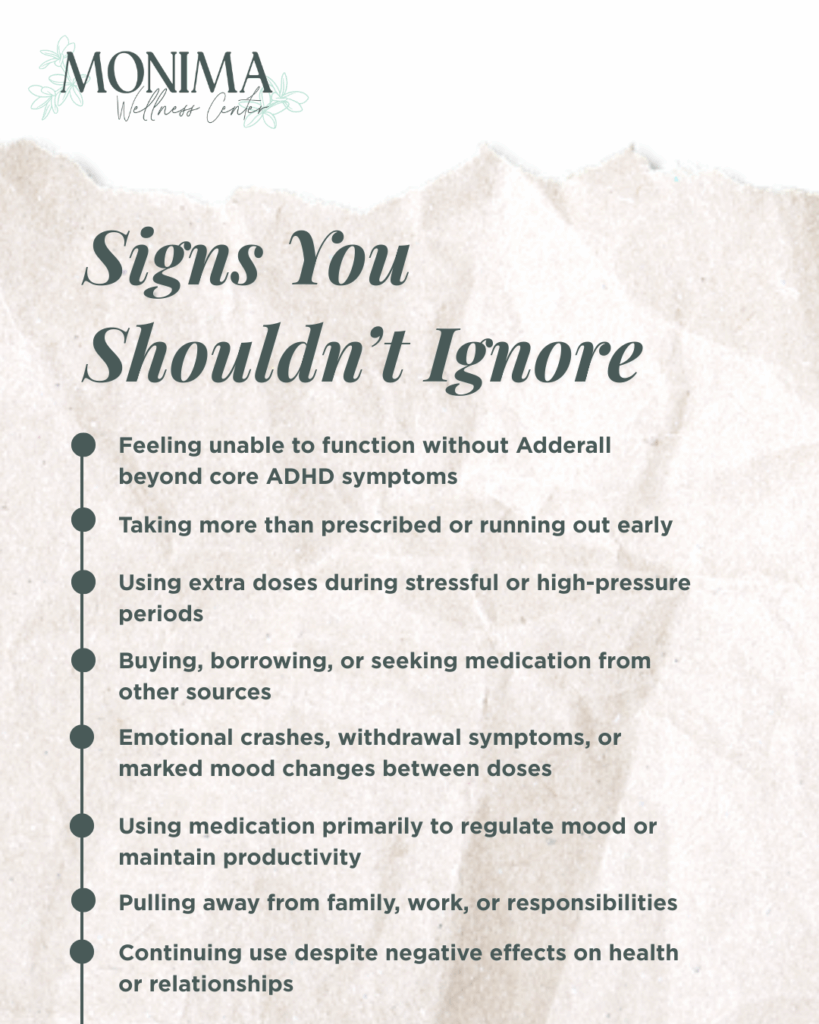
According to a 2025 clinical case report published in The Journal for Nurse Practitioners, these signs often include:
- Feeling unable to function without Adderall beyond core ADHD symptoms
- Taking more than prescribed or running out early
- Using extra doses during stressful or high-pressure periods
- Buying, borrowing, or seeking medication from other sources
- Emotional crashes, withdrawal symptoms, or marked mood changes between doses
- Using medication primarily to regulate mood or maintain productivity
- Pulling away from family, work, or responsibilities
- Continuing use despite negative effects on health or relationships
If you’re recognizing any of these patterns in yourself or someone close to you, it doesn’t mean you’ve done something wrong. More often, they point to unmet needs that haven’t yet been fully supported. Talking things through, adjusting medication, or adding therapeutic or structured outpatient support can help address those needs more effectively. Substance use rarely occurs in isolation, and support works best when it considers the full picture (the whole person).
What Support Options Exist When ADHD and Substance Use Overlap?
When ADHD and substance use concerns exist together, treating them separately often misses the full picture. Integrated care looks at how attention, trauma, coping patterns, and nervous system regulation interact.
Support can come from different places and may include:
- Prescribers or primary care providers for medication review
- Licensed therapists for emotional and behavioral support
- Outpatient programs, like IOP or PHP, when more structure is needed to regain a sense of stability
Outpatient programs like IOP and PHP are non-residential and designed to fit into daily life. They offer more consistent support than weekly therapy, without requiring inpatient care, and can be especially helpful when medication use feels hard to manage on its own.
For those looking for support that goes beyond just treating the addiction, Monima Wellness Center offers outpatient treatment that uncovers root causes. This may include help stabilizing medications through on-site psychiatry, individualized therapy that focuses on trauma and emotional regulation, and somatic and integrative approaches like acupuncture that support the nervous system. Our team works together to coordinate your care, so you can feel grounded and supported as you navigate changes that may feel daunting at first.
Begin Your Healing Journey
If questions about ADHD medication or dependence feel heavy, you don’t have to figure it out by yourself. Our compassionate team of admissions specialists can talk through options and help you get clarity about what level of support might fit your life right now.
Let us verify your insurance for you, or call (858) 500-1542. We’re here when you’re ready.
Frequently Asked Questions (FAQs)
Is Adderall addictive?
Yes. Adderall has known addiction potential because it affects brain systems involved in reward and motivation. When taken as prescribed and monitored by a clinician, the risk of misuse is lower but not eliminated.
Can people with ADHD get addicted to Adderall?
They can. ADHD can change how stimulant medication feels, but it does not remove the risk of addiction. Individual factors like trauma history, chronic stress, and co-occurring mental health conditions can increase vulnerability for Adderall misuse and addiction.
What are the downsides of taking Adderall?
Adderall can be highly effective for many people with ADHD. That said, some people may experience sleep disruption, anxiety, appetite changes, or mood instability. Over time, especially at higher doses, tolerance or dependence can develop, which is why regular follow-up with a trusted provider is essential.
What does Adderall do to the ADHD brain?
Adderall increases dopamine and norepinephrine, which helps support focus, impulse control, and executive functioning in many people with ADHD. In an ADHD brain, these chemicals tend to be less consistently available in areas responsible for attention and regulation. Stimulant ADHD medications like Adderall can help bring those systems into better balance. For people without ADHD, the same increase in dopamine may feel more stimulating or reinforcing rather than regulating. That being said, even for individuals diagnosed with ADHD, responses vary based on individual neurobiology, mental health, and life stressors.
How do I know if my Adderall use is becoming a problem?
Taking more Adderall than prescribed, relying on it to manage emotions, or feeling unable to function without it are common warning signs. If you’re noticing these patterns, it may help to talk things through with a mental health professional or explore more structured outpatient care to determine which type of support would feel most helpful in your unique situation.
References
NIDA. 2019, November 1. Mind Matters: The Body’s Response to Prescription Stimulants. Retrieved from https://nida.nih.gov/research-topics/parents-educators/mind-matter-series/prescription-stimulants on 2026, January 10
Treatment for Stimulant Use Disorders: Updated 2021 [Internet]. Rockville (MD): Substance Abuse and Mental Health Services Administration (US); 1999. (Treatment Improvement Protocol (TIP) Series, No. 33.) Chapter 2—How Stimulants Affect the Brain and Behavior. Available from: https://www.ncbi.nlm.nih.gov/books/NBK576548/
Lakhan, S. E., & Kirchgessner, A. (2012). Prescription stimulants in individuals with and without attention deficit hyperactivity disorder: Misuse, cognitive impact, and adverse effects. Brain and Behavior, 2(5), 661–677. https://doi.org/10.1002/brb3.78
Haskell, B. (2025). Clinical considerations for stimulant medication misuse. The Journal for Nurse Practitioners, 21(9), 105506. https://doi.org/10.1016/j.nurpra.2025.105506