California sober is a term used to describe the lifestyle of giving up alcohol and hard drugs while continuing to use cannabis. Some people include psychedelics like psilocybin, and a few keep occasional alcohol.
There’s no clinical definition for California sober, so the term can include a wide range of habits, from someone who quit opioids or stimulants and now smokes on weekends to someone who traded nightly drinking for nightly edibles.
Whether this is a healthy arrangement depends on the person. California sober works well for some people and poorly for others, and the difference has less to do with what you gave up than with what cannabis is now doing for you.
For people with a history of addiction or trauma, cannabis can sometimes quietly take over the role the old substance played.
Quick Facts
- California sober means abstaining from alcohol and most drugs while still using cannabis, and it isn’t a clinical term.
- A 2026 controlled trial found cannabis reduced how much heavy drinkers drank in the short term, but the researchers cautioned against recommending substitution.
- Among people in sober-living homes recovering from alcohol and other drugs, cannabis use was linked to more use, not less.
- Roughly three in ten people who use cannabis meet criteria for cannabis use disorder.
- The most useful question isn’t which substance you use, but what role that substance is playing in your life.

What Does California Sober Mean
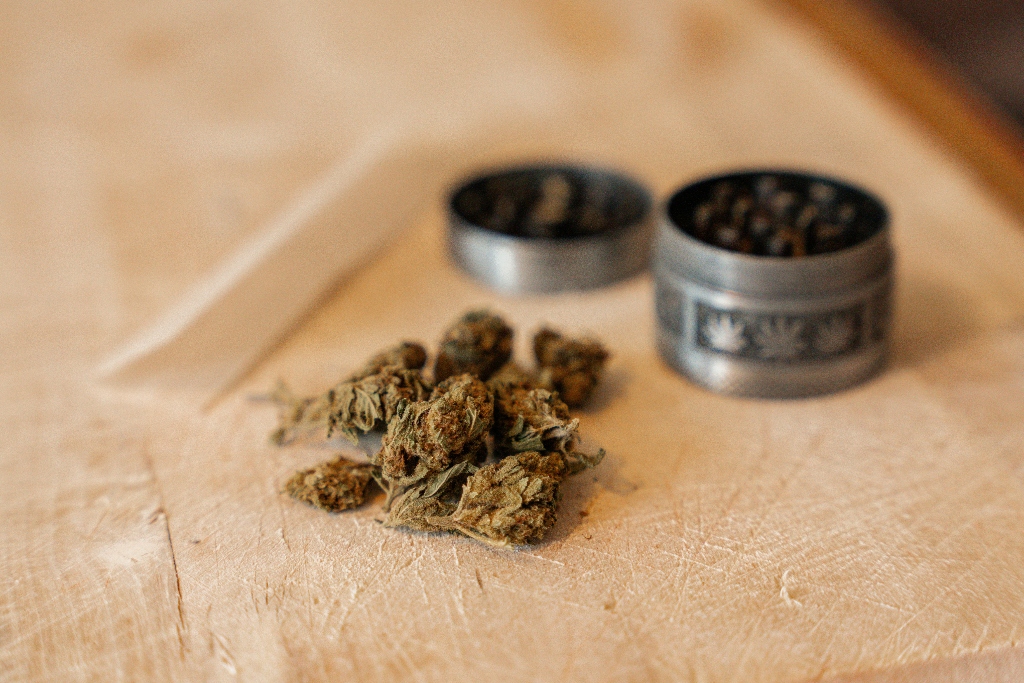
California sober describes a personal choice to cut out alcohol and harder drugs while keeping cannabis, and sometimes psychedelics, in the picture. The term came out of harm reduction culture and became widely known through celebrity interviews and social media rather than through medicine or recovery programs.
Because there’s no official definition, people use the term in different ways:
- Cannabis only, with no alcohol or other drugs
- Cannabis plus occasional psychedelics such as psilocybin
- Cannabis plus rare, moderate alcohol
What all versions share is the idea of reducing harm rather than eliminating every substance. Traditional recovery programs generally define sobriety as abstinence from all mind-altering substances, so California sober sits outside that framework. That doesn’t make it wrong, but it does mean the phrase tells you very little on its own about whether a given person’s use is healthy.
Why Some Women Choose a California Sober Approach
Most people who go California sober aren’t trying to trick themselves. They’ve noticed that alcohol, opioids, stimulants, or another substance was causing real damage. Cannabis feels gentler and easier to control. For some, it also helps with sleep and anxiety. Others find total abstinence so rigid that they’d rather have a middle option than no plan at all.
That reasoning has a legitimate place in care. Dr. Katarina Thatcher, an Addiction and Thought Disorder Specialist at Monima Wellness Center, put it plainly when she spoke with San Diego Magazine, saying, “If being California sober is the thing that’s going to keep you safe and keep you alive, why not, right?” [1]
Harm reduction starts from exactly that point. If a change keeps someone safer than they were, that change matters, even if it isn’t the finish line. The harder question is whether the new arrangement stays safe over time.
What Research Says About Swapping Other Substances for Cannabis
Most of the research on substitution focuses on alcohol, since that’s the most common swap. The most rigorous evidence so far comes from a 2026 trial published in the American Journal of Psychiatry. Researchers gave 138 heavy drinkers who also used cannabis either cannabis containing THC or a placebo, then observed how much alcohol they chose to drink in a simulated bar. After smoking cannabis, participants drank 19 to 27 percent less alcohol than they did after the placebo, depending on the THC dose. [2]
That sounds like good news for the California sober approach, and in a narrow sense it is. Cannabis did reduce drinking in the moment.
The same researchers were careful about what that finding means, though. The participants weren’t seeking treatment. Each session measured only a few hours of drinking. Cannabis didn’t consistently reduce alcohol craving. The authors concluded that recommending cannabis as a substitute or harm-reduction strategy for alcohol use disorder would be premature and potentially risky, and that people already substituting should have their cannabis use monitored by a clinician. [2]
Where California Sober Can Go Wrong
A different picture emerges when you look at people who are actively trying to recover from a range of substances. A 2024 study followed 557 residents of sober-living homes in Los Angeles for a year. Those who used cannabis had almost four times the odds of drinking in the past month compared with residents who didn’t. They also logged more drinking days, more days of other drug use, and more drug-related problems overall. [3]
Cannabis wasn’t working as a substitute for alcohol or other drugs in this group. If anything, it went hand in hand with the substances they were trying to leave behind.
Cannabis also carries its own risk. According to the Centers for Disease Control and Prevention, approximately three in ten people who use cannabis have cannabis use disorder. [4] Dependence often builds gradually, which makes it easy to miss.
Dr. Thatcher’s second observation to San Diego Magazine gets at the real issue. As she put it, “It’s not the substance that’s the issue. It’s your relationship with the substance that then becomes the issue, right?” [1]
When cannabis becomes the thing you reach for to avoid feelings, to fall asleep, or to get through social situations, the relationship looks very much like the one you had with whatever you gave up.
Individual Differences: Who Should Be Most Cautious With Cannabis In Recovery
California sober isn’t equally safe for everyone. The approach carries more risk if any of the following apply to you:
- You’ve met criteria for a substance use disorder in the past, with any substance
- You live with PTSD, complex trauma, anxiety, or depression and use cannabis to manage symptoms
- You notice cannabis use climbing as your use of another substance drops
- You feel restless, irritable, or unable to sleep when you skip cannabis
- You’ve been told by people close to you that your use has changed
Many women who use substances heavily are managing a nervous system that never learned to settle on its own, and cannabis can fill that same role without addressing the reason for the distress.
Additionally, when substance use and a mental health condition overlap, dual diagnosis treatment addresses both at once rather than trading one coping tool for another.
This doesn’t mean cannabis is off-limits for everyone with a trauma or mental health history. The decision just requires careful consideration, preferable with the support of a mental health provider.
A Non-Judgmental Way to Check Your Own Relationship With Cannabis
You don’t need to decide today whether California sober is right or wrong for you. A few honest questions can tell you more than any definition:
- Am I using cannabis to feel good, or to avoid feeling bad?
- Has my use increased since I cut back on other substances?
- Do I plan my day, or my evening, around when I’ll use?
- Can I go a week without cannabis and feel okay?
- Would I be comfortable describing my actual use to a clinician?
If most of those answers sit easily, your approach may be working for you. If several feel uncomfortable, that discomfort is useful information, not a verdict.
The Best Support For Childhood Emotional Neglect
Emotional regulation can be learned in adulthood. The skills that weren’t built early aren’t permanently unavailable — they’re developed later, usually within a relationship that offers the attunement that was missing.
Approaches that tend to fit this work include:
- Relational and attachment-based therapy, which addresses the caregiving patterns directly
- Body-based approaches like somatic therapy for trauma, which help reconnect physical sensation to emotional meaning
- Skills-based work focused on naming, tolerating, and regulating emotional states
Support doesn’t have to start at the highest level of care. For some people, weekly therapy is enough. When emotional numbness, depression, or substance use is affecting daily functioning, an intensive outpatient program offers more structure and community than individual therapy while still allowing for work, school, and family life.

How Monima Wellness Can Help
If you’ve realized that cannabis is doing the same job another substance used to do, you don’t have to sort that out alone. Monima Wellness offers trauma-focused PHP and IOP programs for women and female-identifying individuals in San Diego, with on-site psychiatry and care that treats substance use and mental health together, without judgment about where you’re starting from.
Call 858-500-1542 or verify your insurance to get started.
FAQs
Being California sober means abstaining from alcohol and hard drugs while continuing to use cannabis, and sometimes psychedelics. The term is informal and has no clinical definition, so people apply it in different ways. Some use it as a harm-reduction step toward full sobriety, while others see it as a long-term lifestyle. Whether the approach is healthy depends on the person’s history and how they’re using cannabis.
Florida sober is more of an internet joke, rather than a recovery concept. It typically describes someone who has given up one substance, often alcohol, while continuing to use others, sometimes harder ones. The phrase plays on the California sober idea by exaggerating it. Because the term is used sarcastically and inconsistently, it isn’t a meaningful way to describe anyone’s actual substance use.
Urban Dictionary entries generally define California sober as quitting alcohol and hard drugs while still using cannabis, which matches how the phrase is used in everyday conversation. Some entries also include psychedelics or occasional drinking. These are crowdsourced slang definitions rather than clinical ones. They reflect how people talk about the idea, but they can’t tell you whether a particular pattern of use is safe.
Day three is often the hardest because acute alcohol withdrawal symptoms typically peak between 48 and 72 hours after the last drink. Anxiety, sweating, poor sleep, irritability, and strong cravings can all intensify during this window. For people who drank heavily, withdrawal can also be medically serious, so it’s safest to check in with a healthcare provider before stopping. Symptoms usually begin easing after the peak.
By the standard used in most recovery programs, California sober is not sobriety, because those programs define sobriety as abstaining from all mind-altering substances. From a harm-reduction perspective, though, reducing alcohol and hard drug use is a meaningful change worth recognizing. The label matters less than the outcome here. What counts is whether your current use is supporting your health or quietly replacing an old pattern.
[1] Allaire, D. (2025, January 24). Dry January: Going Cali sober. San Diego Magazine.
[2] Metrik, J., Aston, E. R., Gunn, R. L., Swift, R., MacKillop, J., & Kahler, C. W. (2026). Acute effects of cannabis on alcohol craving and consumption: A randomized controlled crossover trial. American Journal of Psychiatry, 183(2), 134–143.
[3] Subbaraman, M. S., Mahoney, E., Mericle, A., & Polcin, D. (2024). Cannabis use and alcohol and drug outcomes in a longitudinal sample of sober living house residents in California. Journal of Substance Use and Addiction Treatment, 165, 209454.
[4] Centers for Disease Control and Prevention. (2024, December 5). Understanding your risk for cannabis use disorder. U.S. Department of Health and Human Services.