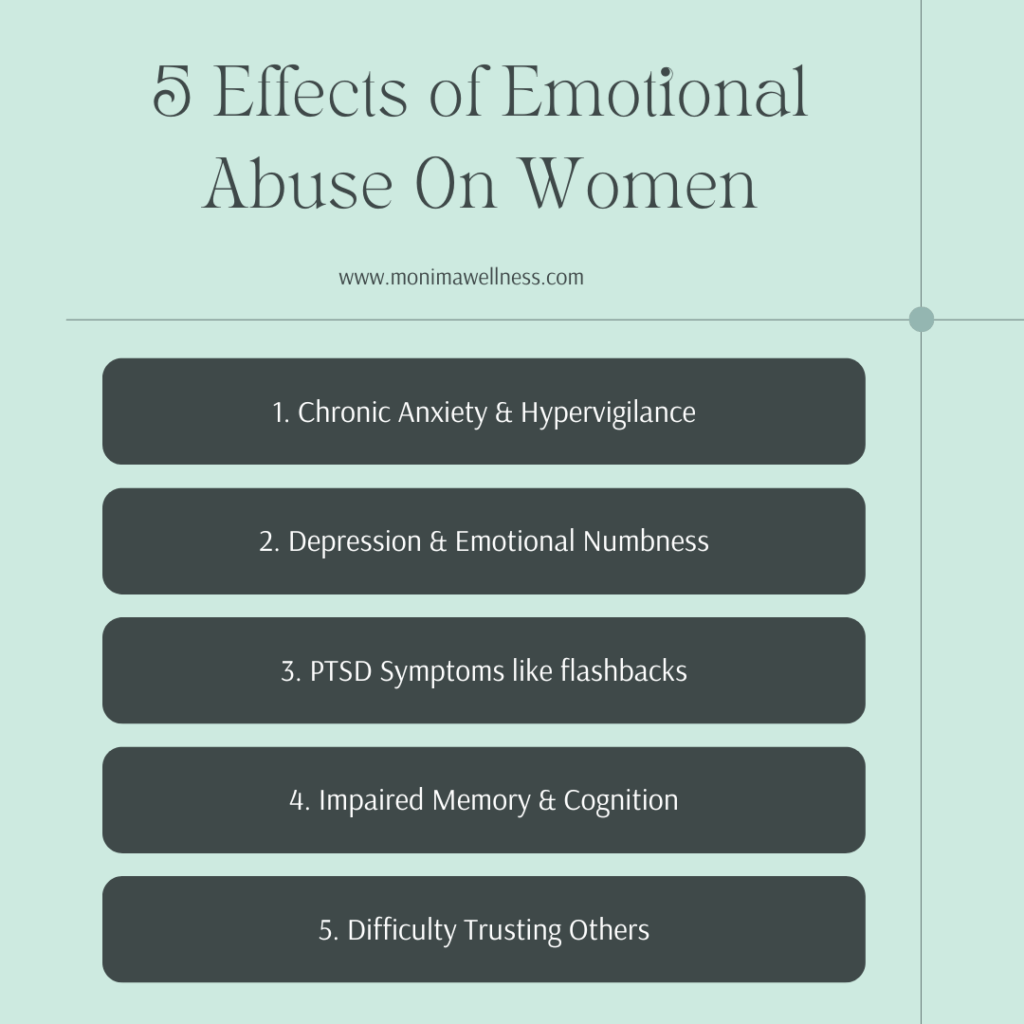
Effects of emotional abuse on women include cognitive impairments in memory and concentration, chronic anxiety and depression, post-traumatic stress disorder (PTSD), and difficulty trusting others in future relationships.
Emotional abuse leaves invisible scars that can profoundly impact every aspect of a woman’s life. Unlike physical abuse, which leaves visible marks, emotional and verbal abuse operates through manipulation, control, and psychological harm—often making it harder to recognize and validate.
Many women who have experienced emotional abuse struggle to name what happened to them. They may:
- Minimize their experiences or question whether it “counts” as abuse
- Feel confused about why they’re struggling with concentration or memory
- Experience difficulty with decision-making or emotional control
- Wonder if their symptoms warrant professional assessment
At Monima Wellness in San Diego, we understand that accurately identifying the effects of emotional abuse requires comprehensive care that addresses how trauma has impacted your cognitive functioning, emotional regulation, and psychological well-being through our specialized women’s mental health programs.
Psychological Effects of Emotional Abuse on Women
The psychological impact of emotional abuse deepens over time, significantly affecting quality of life and functioning. A professional evaluation at Monima can identify these effects and guide appropriate treatment.
Anxiety and Depression
The constant state of fear and hypervigilance fundamentally alters the nervous system’s baseline state.
Anxiety symptoms include:
- Persistent worry and rumination
- Panic attacks
- Physical symptoms (rapid heartbeat, sweating)
- Difficulty relaxing or feeling safe
Depression symptoms include:
- Feeling numb, empty, or disconnected
- Loss of interest in activities
- Persistent sadness
- Changes in sleep and appetite
- Thoughts of death or suicide
How comprehensive assessment helps: Our thorough evaluation process differentiates between anxiety disorders, depressive disorders, and PTSD, providing clarity about your specific diagnosis and creating a personalized treatment plan.
Low Self-Esteem and Self-Worth
Abusers systematically attack their victims’ self-concept through criticism, blame, and degradation.
Common manifestations:
- Negative self-talk mirroring the abuser’s criticism
- Difficulty accepting compliments
- Constant unfavorable comparison to others
- Tolerating mistreatment in other relationships
- Perfectionism driving impossible standards
Post-Traumatic Stress Disorder (PTSD)
Many women who experience prolonged emotional abuse develop PTSD symptoms:
The Four Symptom Clusters:
- Re-experiencing: Intrusive memories, nightmares, flashbacks, intense reactions to reminders
- Avoidance: Avoiding people/places/thoughts related to abuse, emotional numbing
- Negative thoughts and mood: Persistent negative beliefs, distorted self-blame, inability to experience joy
- Hyperarousal: Being easily startled, constant tension, difficulty concentrating or sleeping
Monima’s comprehensive trauma treatment program identifies PTSD and differentiates it from other conditions with similar symptoms, supporting accurate diagnosis and targeted treatment planning.
Difficulty Trusting Others
Emotional abuse damages trust in others and in your own judgment:
- Hypervigilance: Constantly analyzing others’ words for signs of manipulation
- Fear of vulnerability: Keeping people at arm’s length
- Relationship confusion: Either recreating abusive dynamics or avoiding all intimacy
- Testing behaviors: Pushing people away to see if they’ll stay
Physical Health Consequences of Emotional Abuse on Women
The chronic stress of emotional abuse creates measurable impacts on physical health:
Cardiovascular Problems
- Increased risk for hypertension, heart disease, and stroke
- Elevated cortisol and adrenaline damage blood vessels
- Lifestyle factors (decreased activity, poor diet) compound risk
Gastrointestinal Issues
- Irritable bowel syndrome (IBS)
- Chronic stomach pain and nausea
- Changes in appetite and eating patterns
- Development of eating disorders
Weakened Immune System
- More frequent illnesses
- Slower recovery from infection
- Chronic inflammation contributing to multiple health problems
- Sleep disruption further compromising immune function
How Trauma Changes the Brain
The effects of emotional abuse develop through repeated exposure to psychological harm, creating lasting changes in brain function:
| Brain Region | Changes from Abuse | Impact on Daily Life |
| Amygdala | Becomes hyperactive | Constant anxiety, overreacting to threats |
| Hippocampus | Can shrink in size | Memory problems, difficulty processing events |
| Prefrontal Cortex | Shows reduced activity | Poor decision-making, emotional regulation issues |
These neurobiological changes aren’t signs of weakness—they’re the brain’s attempt to protect you in an unsafe environment.
Comprehensive assessment at Monima can objectively identify how emotional abuse has impacted your specific patterns of thinking, feeling, memory, attention, and executive functioning.
Effects of Emotional Abuse on Women: Impact on Relationships
The effects of emotional abuse ripple outward, affecting all areas of social connection:
Romantic Relationships:
- Unconsciously recreating abusive dynamics
- Avoiding intimacy altogether
- Constant relationship anxiety
- Misinterpreting neutral behaviors as threats
Family Dynamics:
- Difficulty setting boundaries with family members
- Guilt about limiting contact with abusive relatives
- Stress of family events triggering trauma responses
Friendships:
- Social isolation and difficulty rebuilding connections
- Social anxiety extending to all interactions
- Difficulty being authentic
- Distrust of own social judgment
Is it Emotional Abuse? 12 Common Signs of Emotional Abuse
Recognizing emotional abuse is often the most challenging aspect. Common patterns include:
Constant Criticism and Belittling
- Criticizing appearance, intelligence, or performance
- Escalating from subtle put-downs to overt insults
- Making you question yourself rather than recognizing the abuse
Control and Isolation
- Dictating what you wear, who you see, where you go
- Monitoring phone, email, or social media
- Gradually cutting you off from friends and family
Manipulation Through Guilt and Fear
- Threatening self-harm if you leave
- Suggesting you’re mentally unstable
- Alternating between kindness and cruelty
Gaslighting
- Denying events occurred
- Trivializing your feelings (“You’re too sensitive”)
- Making you question your own reality and memories
Treatment Options for the Effects of Emotional Abuse on Women
Once the assessment identifies specific effects, various evidence-based treatments can address trauma recovery:
Evidence-Based Therapies
Monima offers comprehensive evidence-based therapies tailored to each woman’s unique circumstances:
Trauma-Focused Therapies:
- EMDR: Processes traumatic memories through bilateral stimulation
- Cognitive Processing Therapy: Challenges unhelpful beliefs from abuse
Emotion Regulation:
- Dialectical Behavior Therapy (DBT): Builds skills for emotional regulation, distress tolerance, interpersonal effectiveness, and mindfulness
- Cognitive Behavioral Therapy (CBT): Addresses distorted thinking patterns and builds coping skills
Medication Management: Our psychiatric team makes informed medication decisions targeting specific symptoms as part of comprehensive care.
Group Therapy: Connects you with others who understand, reduces isolation, and provides opportunities to practice relationship skills in our women-centered environment.
Holistic Healing Approaches
Our interdisciplinary approach combines evidence-based and holistic practices:
- Trauma-informed Yoga: Reconnects women with their bodies and promotes nervous system regulation
- Breathwork: Provides tools for managing physiological responses to distress
- Acupuncture: Supports physical healing alongside psychological recovery
- Sound Healing: Facilitates emotional release and nervous system regulation
Getting Help at Monima Wellness
The effects of emotional abuse on women are profound, affecting cognitive functioning, emotional well-being, physical health, and relationships. These impacts are real, measurable, and deserving of comprehensive assessment and treatment.
At Monima Wellness Center in San Diego, we understand that healing begins with understanding. Our comprehensive approach provides thorough assessment of how emotional abuse has affected your specific patterns of thinking, feeling, and functioning, followed by personalized treatment addressing your unique needs.
Contact Monima Wellness today at (858) 500-1542 to begin your healing journey.
Crisis Resources
If you’re in immediate danger in the USA:
- National Domestic Violence Hotline: 1-800-799-7233 (24/7)
- National Suicide Prevention Lifeline: 988 (24/7)
- Crisis Text Line: Text HOME to 741741 (24/7)